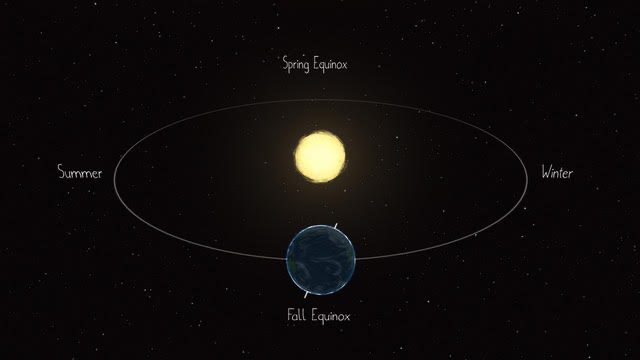
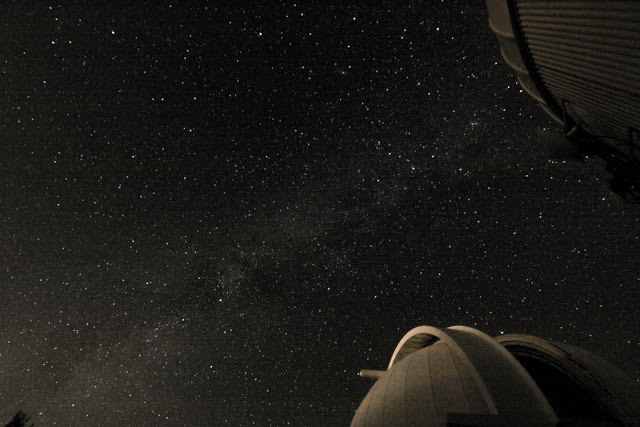
Mary Turner presents her popular seasonal talk about what to see in the night sky from October to December, as well as fascinating myths and facts about each object. Included is the Oct. 14th annular eclipse; perhaps the highlight of the next three months. Learn about bright planets, meteor showers, and all else accessible, to the naked eye, binoculars, and/or telescopes.
Bio: Mary Turner received her Ph.D in Optical Sciences at the University of Arizona (UA). She is currently the Technical Fellow in Optical Design for Edmund Optics, where she designs custom optical systems for a wide variety of applications, including camera systems, machine vision applications, free-space communications and other laser systems. Additionally. Dr. Turner is a lecturer for the University of California-Irvine, teaching courses in optical design. She also lectures at UA in aspects of optical design, including tolerance analysis, polarization devices and stray light analysis. Throughout her career, Dr. Turner has taught optical design fundamentals to more than 5000 students around the world. She has also authored chapters in several technical references relating to the field of optical design.
October’s meeting will also include information on how to support TAAA’s Outreach missions. Without robust volunteer support, this mission cannot be accomplished. Bernie Stinger, School/Public Star Party Manager will discuss the Star Party program, its process, how you can become involved, the rewards of doing outreach, and what equipment you need. And Jim Knoll will talk about the Tucson Stargazing Adventures (paid star parties), a similar process to the School program, and how you can help accomplish this portion of the TAAA mission.
Title: Civil Planetary Defense: The Catalina Sky Survey Needs Your Help Discovering New Asteroids
The Catalina Sky Survey (CSS) has been in operation since the late 90’s with the goal of discovering and tracking Near-Earth Asteroids (NEAs). Headquartered in Tucson, with its primary telescopes on Mt. Lemmon, CSS plays a major role in Earth’s planetary defense. David Carson Fuls will present CSS’s latest project, a new citizen science initiative called “The Daily Minor Planet” which gives volunteers the opportunity to review images taken by CSS survey telescopes to discover new asteroids! This project, much like CSS nighttime operations, focuses on rapid identification of new objects, so images are uploaded the day after they are taken. Carson will cover the project in detail and present its initial discoveries since its official launch in May, ’23. For more info., visit: https://www.zooniverse.org/projects/fulsdavid/the-daily-minor-planet
Bio: David Carson Fuls is the Senior Operations Scientist/Engineer for the Catalina Sky Survey. A graduate of Stephen F. Austin State University (MS physics), he has been with CSS since 2015, and has discovered thousands of asteroids and eight comets that bear his name. The asteroid 1999 UN24 was named in his honor. When not searching for space rocks, Carson volunteers with the Southern Arizona Rescue Association, which performs search and rescue missions in the mountains and deserts of southern Arizona.
Photo: Catalina Sky Survey from Catalina Sky Survey
Mercury is visible around 8 pm in the west until August 16th.
Mars is about 5 degrees to the upper left during this time, just a little dimmer, but still visible since it is higher up. By the end of the month it becomes hard to find. It will reappear in March 2024. During the first week of August, both planets are best visible. Around the 13th, they are closest together.
Saturn in Aquarius is visible all night since it is at opposition on the 27th. Its rings are narrow, 43″ x 6″ in extent.
Jupiter in Aries rises now before midnight, outshining all stars and other planets.
Venus rises up to become visible starting on the 18th during dawn. It is obvious by the 31st, when a 10 percent illuminated crescent shows up in binoculars. Venus is near the head of Hydra, where other planets do not go.
The moon occults Antares on the 24th between 7:03 and 7:58 pm AZ Time in Tucson. The disappearance is a few minutes after sunset, when it is easily visible in binoculars and impressive in a telescope near the half moon. It occurs at the dark side of the moon which is not visible during bright twilight. The reappearance is at the bright limb, when the sky is dark.
The Perseids are active until mid-month, visible without moonlight. The maximum is the night of the 12th, morning of the 13th. Best viewed under dark skies at the peak after midnight on the morning of the 13th. Look toward the east. The meteors will appear to emanate from the constellation Perseus. The parent comet is Swift-Tuttle (16 miles/26 kilometers across).
Join the Tucson Amateur Astronomy Association (TAAA) and Pima County Natural Resources Parks and Recreation for some stargazing at Historic Canoa Ranch. We will observe planets, star clusters, multiple star systems, nebulae, galaxies, and lots more.
FREE but REGISTRATION IS REQUIRED: Go to Eventbright and search for stargazing Canoa Ranch. May fill up quickly, so recommend registering as early as possible (event may not show up in Eventbright until about two months before).
Join the Tucson Amateur Astronomy Association (TAAA) and Saguaro National Park – East for some Sun gazing at the park. We will observe the Sun through telescopes with appropriate filters so you will get to see sunspots, prominences, flares, and more.
The Sun is nearing its peak in the sunspot cycle so there is lots of activity on its surface.
This event is FREE and open to the public. NPS admission fees apply.
The telescopes will be set up at the Bicycle Ramada next to the Visitors Center. This event will most likely be canceled in the event of clouds/rain.
Star Party-Catalina State Park
Tucson, AZ
Viewing Location: Trailhead Picnic area at end of road inside the park.
Information: Great dark skies just north of Tucson at Catalina State Park. Star Party open to the Public. Admission cost for entrance into Catalina State Park.
Tucson Amateur Astronomy Association will have 10 telescopes for astronomical viewing.
We will observe Planets, Nebulae, Galaxies, Star Clusters and lots more. Great opportunity to look through a wide variety of telescopes. Weather dependent. For real-time updates, follow this event on the Tucson Amateur Astronomy Association Facebook Events Page (https://www.facebook.com/TucsonAstronomy/).
Additional details will be posted here and on Facebook as we get closer to the event.
Information: Great dark skies just north of Tucson at Oracle State Park. Star Party open to the Public. Admission cost for entrance into Oracle State Park may apply. Tucson Amateur Astronomy Association will have several telescopes for astronomical viewing. We will be primarily observing the Moon but also Planets, Nebulae, Galaxies, and Star Clusters.
Great opportunity to look through a wide variety of telescopes. Weather dependent.
For real-time updates, follow this event on the Tucson Amateur Astronomy Association Facebook Events Page (https://www.facebook.com/TucsonAstronomy/). There is generally a talk and other events also taking place. Check the Oracle State Park website for additional information. Check TAAA Facebook Page or here for any updates as we get closer.
Star Party – Saguaro National Park – East
Tucson, AZ
Great dark skies on the East side of Tucson at Saguaro National Park – East.
Star Party is open to the Public. Event is free but NPS admission fees apply.
The Tucson Amateur Astronomy Association will have several telescopes for astronomical viewing. We will observe Planets, Nebulae, Galaxies, Star Clusters and lots more. Great opportunity to look through a variety of telescopes.
Weather dependent. For real-time updates, follow this event on the Tucson Amateur Astronomy Association Facebook Events Page: (https://www.facebook.com/TucsonAstronomy/).
Viewing Location: Bus Lanes @ North end of Parking Lot
Information: Great dark skies in Northeast Tucson. Star Party open to the Public. Cost: FREE. Tucson Amateur Astronomy Association will have several telescopes for astronomical viewing. We will observe Planets, Nebulae, Galaxies, Star Clusters and lots more. Great opportunity to look through a variety of telescopes. Park gate may close before event end time, so arrive as close to start time as possible. Weather dependent. For real-time updates, follow this event on the Tucson Amateur Astronomy Association Facebook Events Page (https://www.facebook.com/TucsonAstronomy/).
FREE but REGISTRATION IS REQUIRED. go to: Eventbright and search “Stargazing” and location “Tucson”. These events fill up fast so recommend registering early. Event may not show up until about two months out.