

By Erich Karkoschka
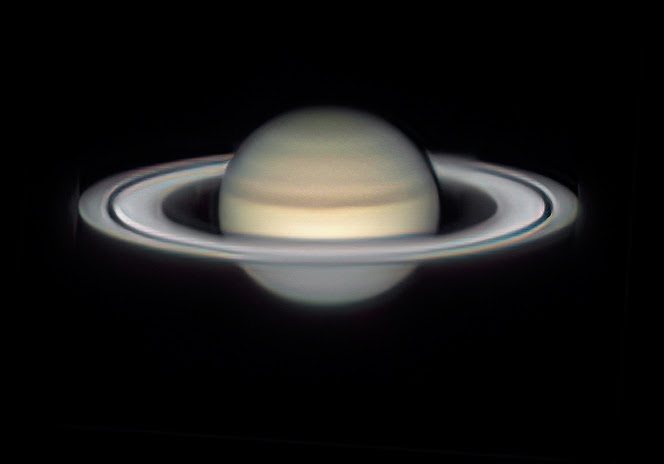
Saturn is the only bright evening planet. It transits around 9-10 pm 60 degrees high for great telescopic views of its narrow rings. There is no other bright star anywhere close to Saturn.
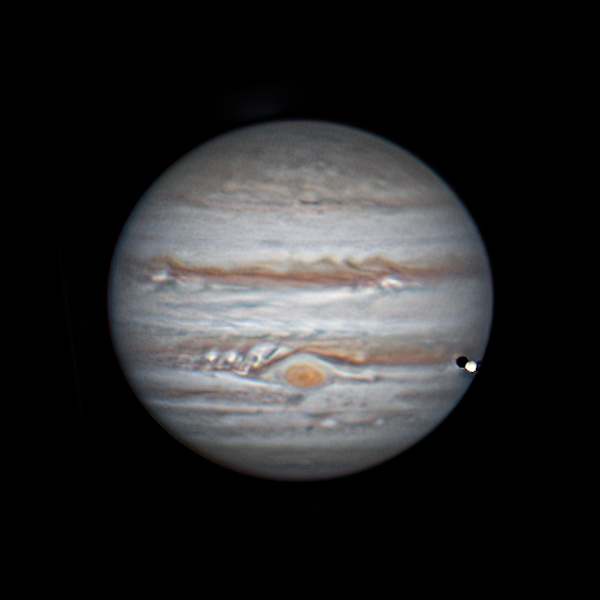
Mars and Jupiter are close together in Leo, slightly west of Regulus. They rise around midnight and get 70 degrees high by dawn. Jupiter is the brightest object before dawn and almost three magnitudes brighter than Mars. On the 16th, Mars passes Jupiter 1.2 degrees north. They stay within 5 degrees of each other all month. The triangle Jupiter-Mars-Regulus changes its shape almost daily, especially around the 26th when Mars passes Regulus 2 degrees to the north. Although Mars passes Jupiter every two years, this is the best conjunction between 1980 and 2075 because they are visible far from the sun and can be observed high in the sky this time. Both planets will stay in the same part of the sky for half a year and will be spectacular around March.
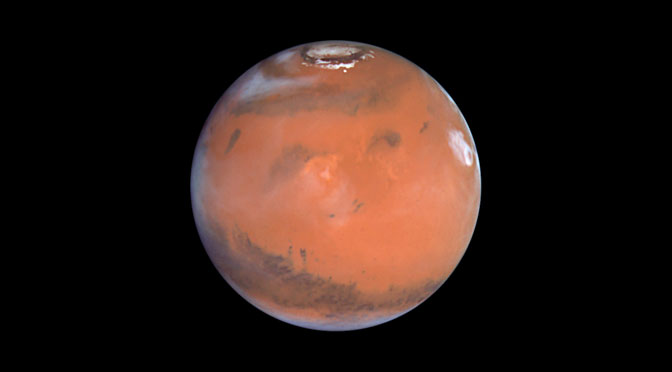

Venus rises before 6 am in early November and already at 4 am by the end of the month. By then it will be brilliant during early dawn around 6 am. In binoculars, its thin crescent is visible best when Venus is a large 60 arc-seconds diameter, but still visible later when Venus is a thicker crescent of 40 arc-seconds. Venus moves in a curve counterclockwise around Spica which is interesting to watch.

Mercury starts its morning visibility on the 11th. During the last two weeks of November it is easy to spot well below Venus.

Uranus comes in opposition on the 25th. It moves slowly, currently 6 degrees to the southeast of the Pleiades. At magnitude 5.6, it is easy to find in binoculars but difficult to see naked eye.

The brightest minor planet (4) Vesta is in norther Cetus. At magnitude 7, it is easy to see in binoculars, but difficult to find by star-hopping since there are no bright stars nearby.

The first view of the moon after New Moon on the 9th is the following day just before 6 pm low in the southwest, but it might be a challenge to see it naked eye. On the last morning of November, the moon joins Jupiter, Mars, and Regulus, a sight not to be missed.