Next TAAA Monthly Meeting: Friday October 2, 2026
TAAA’s next general member meeting will be held on Friday September 4, 2026 at the University of Arizona Steward Observatory Lecture Hall auditorium room N210 at 933 N Cherry Ave., Tucson, AZ. The Main Presentation will start at 6:30 PM. This will be a hybrid meeting (both in person and on social media). TAAA Members can attend in person or by Zoom (link at the bottom of the email announcement to members). The public may attend in person or public streaming is available at https://www.youtube.com/@tucsonamateurastronomyasso2702/streams. The meeting will be available afterwards on that same YouTube channel.
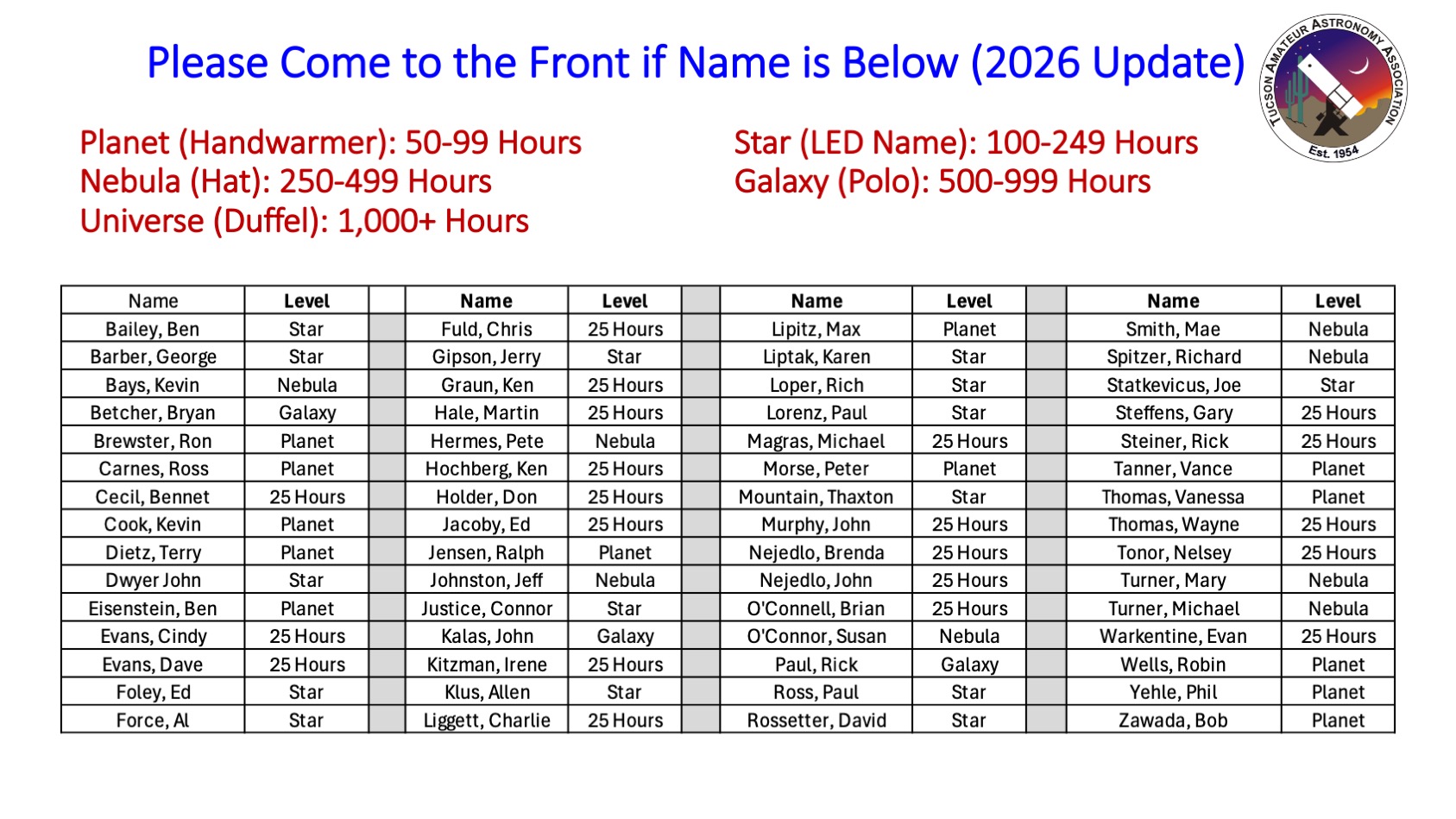
Talk: Training on the TAAA Policy on Working with Minors. President Dr. Ed Foley and Jim Knoll will provide the Fundamentals Training on the TAAA Policy on Working with Minors. This is a triennial requirement for all members participating in outreach events and good information for all members. This policy was developed to assist members with the safe interaction with youth while participating in outreach events. The policy consists of 5 levels depending on the outreach circumstances and explains the best practices within each level. Ideally, members should attend in person, but can also attend via Zoom. Additionally, updated outreach awards will be distributed to members attending in person. Go to the following link if you want to see if you will be receiving an updated award: https://tucsonastronomy.org/wp-content/uploads/2026/09/2026-TAAA-Outreach-Award-Update.jpg
Dr. Ed Foley is President of the Tucson Amateur Astronomy Association, TAAA Webmaster, and the Astronomy Camp Coordinator for youth events and our Chiricahua Astronomy Complex or TIMPA sites. Jim Knoll is the Tucson Stargazing Adventures (private Star Party) Coordinator, the Chiricahua Astronomy Complex Director, and a member of the Policy on Working with Minors Committee.