Meet TAAA on Social Media




By Erich Karkoschka

Venus is setting at 7:30 pm. Its visibility increases as the sun is setting earlier. On the 5th, the moon is 4 degrees from Venus. On the 25th, Venus passes Antares 3 degrees north.

Saturn is prominent all evening. Its rings are 10 times narrower than their 43 arc-seconds extent. Views of its six brightest satellites are best at the current geometry.

Jupiter becomes the brightest evening star as its rising times moves from 10 pm to 8 pm. It is at its northernmost location in Taurus, transiting 80 degrees high.

Mars rises just before midnight. Its motion in Gemini can be seen as the triangle with Pollux and Castor constantly changes shape. With magnitude 0 and 9 arc-second size, it becomes a worthwhile object in telescopes.

Uranus and Neptune are visible in the evening sky between Saturn and Jupiter. Uranus is easy to locate 5 degrees south of the Pleiades.

Comet Tsuchinshan-ATLAS (C/2023 A3) is magnitude 2 with a 5 degree tail. Starting on the 11th, it becomes visible and moves higher in the early evening sky, but fades rapidly towards the end of the month. The best compromise between altitude and magnitude may occur around the 16th, while the best dark sky without moonlight will start on the 19th. It moves from Virgo through Serpens into Ophiuchus at 7 degrees per day first, slowing to 2 degrees per day later. Its fast motion can be seen in a telescope within a minute.

The Draconid meteor shower may have a special high peak for half an hour around midnight of the 7th.
CAC Dark Site Reservations
The TAAA Dark Sites are for members and their guests. Each site has days scheduled around the new moon that are hosted by a trained member, during which members are always welcome.
The TIMPA dark site in Tucson, AZ is open at times to members on the days we have a host in residence.

Reservations for the TIMPA site are required and should be submitted on this website any time within 90 days of the date being reserved. This site allows members of the Tucson Amateur Astronomy Association to register to observe on a pad or, if you are a certified user, reserve a telescope viewing.
Members can reserve:
Click the areas below to check available dates for your desired type of Visit and complete your request.
Tel
If you do NOT receive a response confirming your reservation within 24 hours from the CAC Reservations Manager, you may follow-up with an email to:
cac-reservations[at]tucsonastronomy.org.
IMPORTANT RESERVATION CANCELLATION/MODIFICATION PROCESS: Go here to MODIFY/CANCEL an existing reservation for a place to stay or equipment you have reserved. If you cannot keep your reservation due to weather or other issues, PLEASE CANCEL it so others may be able to use the site and we know who is on the site. Repeated failures to cancel may result in losing reservation privileges.
If you are unsure about your reservation status, contact the CAC Reservations Manager directly at: cac-reservations[at]tucsonastronomy.org
We encourage suggestions and comments about the reservation system to also go to the Reservations Manager.
By Erich Karkoschka
Venus is setting around 8 pm. It is only visible for a short time right after sunset. It is slowly getting better visible.
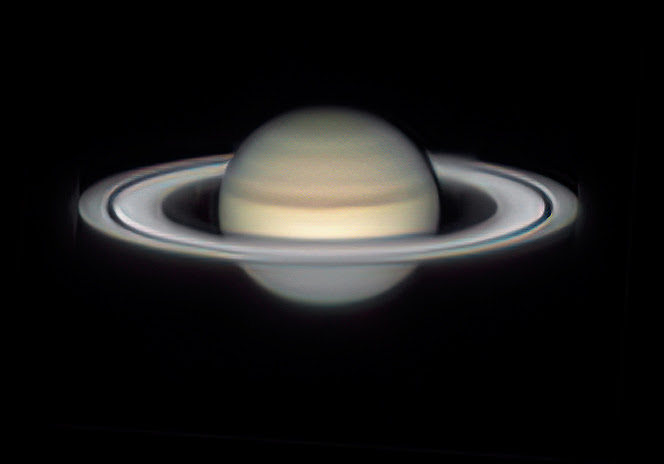
Saturn has its opposition on September 7 (opposition means it is opposite of the Sun from Earth, is usually at its closest to Earth, and is visible all night). Its rings are only 4 degrees open..
Neptune is 10 degrees east of Saturn. It comes into opposition September 20.
Uranus is now rising before midnight, 6 degrees south of the Pleiades.
Mars is rising around 1 am. It passes 5 degrees north of Aldebaran on August 4. Both are first magnitude with similar orange color.
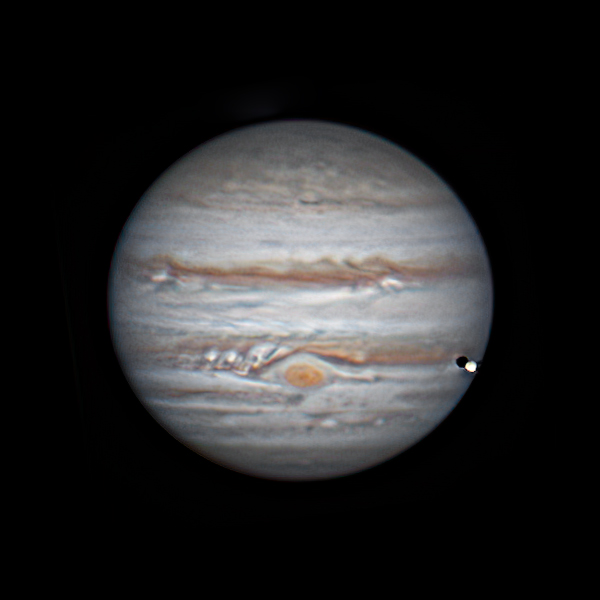
Jupiter in Taurus gets passed by Mars only .3 degrees to the north on August 14. This means you can see both planetary disks in a telescope in the same field of view.

Mercury has a good but short morning visibility from August 29 to September 19. On September 9 it passes .5 degrees north of Regulus. While Mercury is easily visible, Regulus is 2 magnitudes fainter and close to the limit of visibility.

The Moon passes 1 degree north of Venus on August 5, 1 degree south of Antares on August 13, .5 degrees from Saturn on August 20. It is near Mars and Jupiter on August 27, near Mercury on September 1, and near Venus again on September 4. It occults Saturn on September 17 from 4:14 to 5:04 am. The same evening brings a small partial lunar eclipse right after sunset, from 7:12 to 8:17 pm (PDT or Tucson MST) September 17. Visible throughout the U.S.
The Perseid meteor shower peaks around August 12. Best viewed from a dark site in the early morning hours, but you may see some during the evening hours.
T Coronae Borealis COULD become a bright nova during these two months. Look for it in the Corona Borealis constellation, which is a curve of stars high to the west early evening (highest at 6 pm and setting around 1:42 am). It is near the constellation of Bootes (which looks like a kite or ice cream cone and is anchored by the bright star Arcturus (find Arcturus by following the arc of the handle of the Big Dipper to Arcturus — “Arc to Arcturus”) T Coronae Borealis is to the south of the upper star in the constellation (furthest away from the brightest “Alpha Star” constellation star). If it goes Nova, it will become very bright for a short period of time (probably a few days). It will outshine the Alpha star. Watch for news then go spot it. It will appear very bright. Last time it went Nova was in 1946. T Coronae Borealis is a double star (cool red giant and a hot white dwarf).
By Erich Karkoschka
Mercury is visible all month at dusk. It is best in the second week of July.
Venus is also visible all month at dusk. If you look before 8 pm, you will see Venus very low in the WNW. If you look after 8 pm, you see Mercury much higher and further left. They could be mixed up if you look at 8 pm because Venus may hide behind the horizon.
Saturn rises around 10 pm. In a telescope it shows its rings almost edge-on.
Mars rises around 1 am and gets 30 degrees high by dawn. It moves closer to Aldebaran which is of the same magnitude and almost the same color.
Jupiter is 40 degrees east of Mars at the beginning of July and thus rises much later, but the distance shrinks to 8 degrees by the end of the month for a close August 14 conjunction.
Uranus is .6 degrees north or Mars on the 15th. Neptune is close to Saturn.
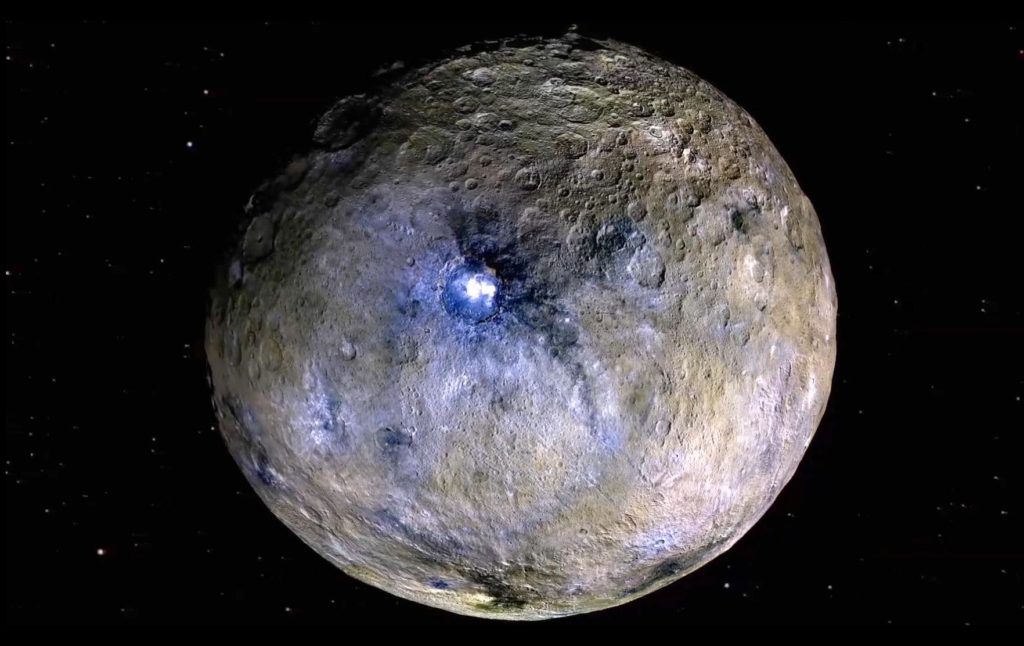
The first minor planet and dwarf planet Ceres is in opposition on the 5th low in Sagittarius. At magnitude 8, one can find it in binoculars.
The extremely thin moon sits between Mercury and Venus on the 6th. It is more difficult to find than Mercury. The next evening the moon is very easy to see above Mercury. On the 30th, the moon joins Mars, Jupiter, and Aldebaran, all close together.
The most impressive event is the occultation of Spica by the moon on the 13th from 7:54 to 9:14 pm. At the disappearance, dusk is still bright so Spica is probably not visible naked eye, but great in a telescopes. At the reappearance, the bright limb of the moon makes it challenging to see Spica at the very moment of the event.
By Erich Karkoschka
There are NO planets visible in the evening except for Mercury starting June 24th around 8 pm.
Saturn rises around 1 am, and just before midnight by the end of June. It is well up at dawn, visible with a thin ring only 2 degrees tilted.
Mars follows between 1 and 2 am.
Jupiter becomes visible again at dawn after June 5th.
Venus is moving into the evening sky and will become visible in early July.
The Moon shows a thin crescent on June 7th below Castor and Pollux. It occults Saturn on June 27th at 9 am, visible in a telescope since the Moon is easy to find. The exit at 10 will be more difficult because the moon will be only 14 degrees high and the location at the lunar dark limb will be hard to find.
by Erich Karkoschka
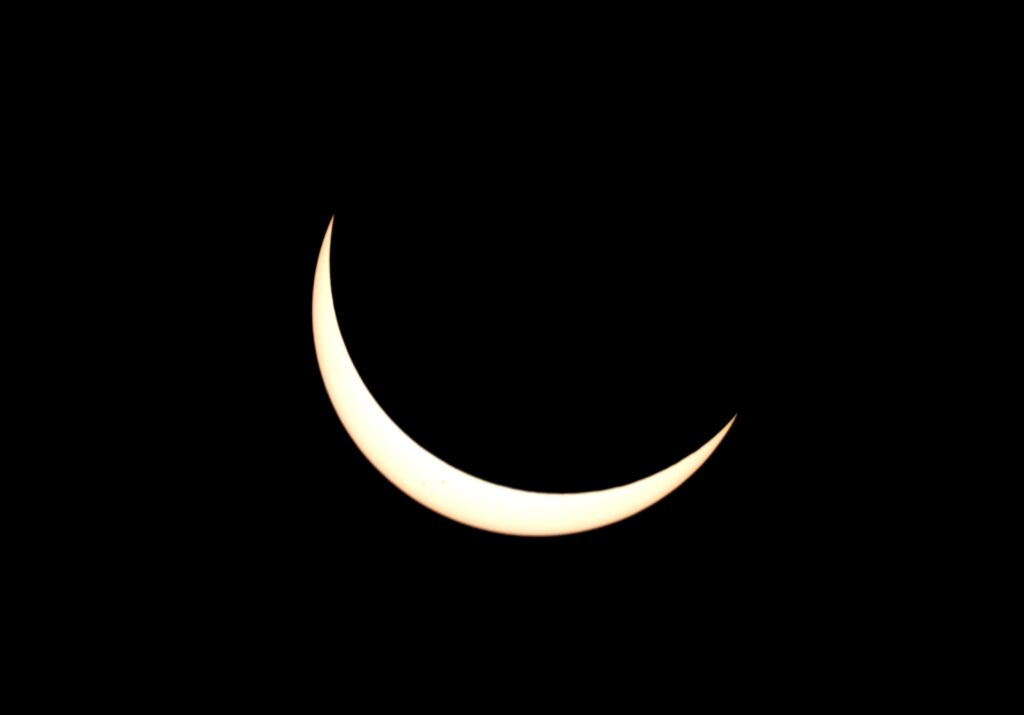
The New Moon on the 8th brings a partial solar eclipse in Tucson during late morning It is total on a path from Mazatlan in Mexico, through Texas, to the Great Lakes. The following day, the thin crescent can be seen just before 8 pm.
Venus rises during the dawn and may be visible naked eye, at least during the first half of the month.
Mars is rising earlier, but it still is not very high when dawn starts.
Jupiter is visible in the west after dusk. By the end of the month it sets at 8 pm, just as it gets dark.
Saturn starts the month just to the lower left of Mars. On the 10th, both planets are only half a degree apart from each other. Both have the same brightness, but not the same color. By the end of the month, Saturn is much higher than Mars, and its rings are quite narrow.

Uranus gets passed by Jupiter on the 20th when they will be only half a degree apart from each other.
Comet 12P/Pons-Brooks is in the vicinity of Jupiter and may be fifth magnitude. It is heading south and is getting really low after mid-month.
By Erich Karkoschka
Saturn is only visible until February 11 during dusk.
Mercury starts its best evening visibility of the year on March 10.
Jupiter transits high at sunset at the beginning of February. However, by the end of March it is already down to 20 degrees high in the west when it becomes visible right after sunset.
Uranus is high in the evening sky and sets around midnight.
Venus and Mars are visible during dawn. First, Mars is difficult to see 10 degrees to the lower left of Venus. On February 22, they are only .6 degrees apart from each other with Venus 100 times brighter than Mars. Then Mars will be to the upper right of Venus with their distance increasing to 18 degrees by the end of March.
The Moon has two conjunctions with Jupiter on February 14 and March 13. The close conjunction with Mercury or February 11 is also interesting to watch since the moon will be a very thin crescent.
There is a penumbral lunar eclipse at midnight of March 24. Since it is almost partial, the darkening will be quite obvious.
By Erich Karkoschka
Saturn is well visible during the early evening. It sets around 8 pm. Soon it will be too close to the Sun. When it reappears in the Spring, Saturn’s rings will only be half as open as now.
Jupiter transits during dusk. It is very high and good for telescopic observations. On the 20th, Ganymede is transiting the disk after 10 pm, visible as a dark spot.
Uranus is high in the evening sky east of Jupiter.
Neptune is west of Jupiter.
Brilliant Venus is best observed between 5 and 6 am, just before down starts.
Mercury joins Venus, visible until the end of the month. It is to the lower left of Venus around 6-7 am. There is no other star at similar brightness in this area of the sky. If you see one, it is Mercury.
Mars is within half a degree of Mercury on the 27th. Since it is a magnitude fainter then Mercury, it may require very clear air to make it out naked eye. Binoculars will easily show this close pair.
By Erich Karkoschka
Mercury has a modest evening visibility until December 14th. Look to the southwest around 6 pm with no star nearby to confuse it with.
Saturn transits before dark and is well visible until late evening.
Jupiter shifts its transits from 10 pm to 8 pm during the month. Its elevation is then 70 degrees and its 48 arc-second diameter is perfect for telescope viewing.
Venus comes up around 4 am and is almost 40 degrees high in the southeast by the time the sun rises.
Uranus is east of Jupiter and Neptune is east of Saturn. Both are placed well for evening observation with binoculars.
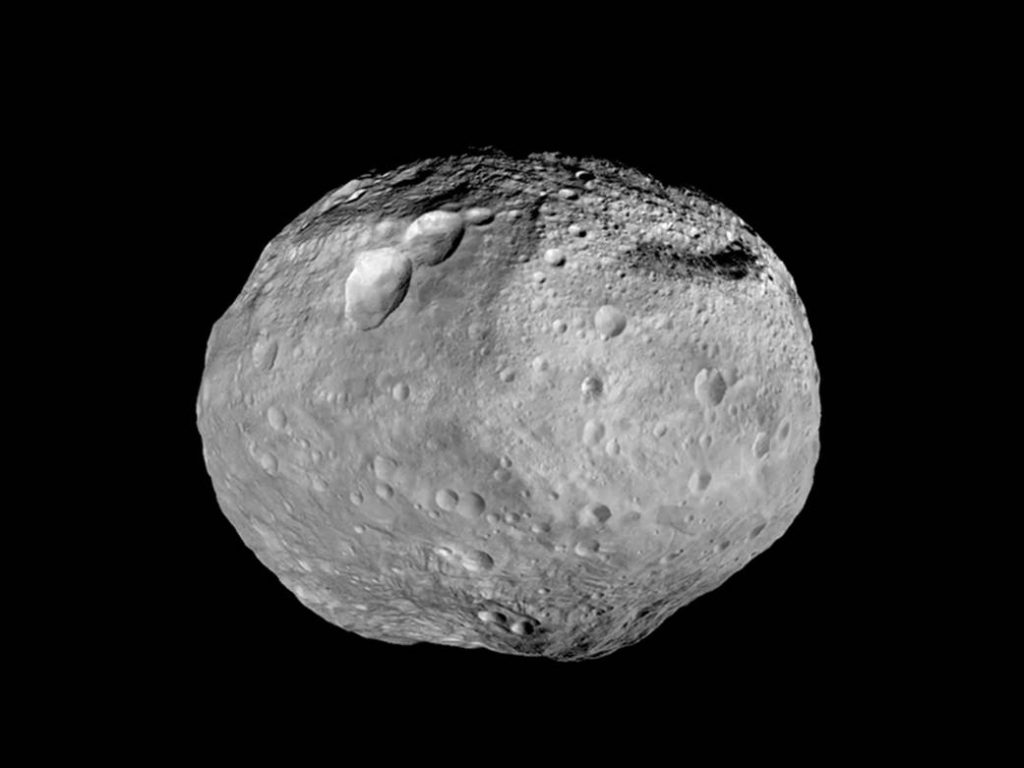
Vesta, minor planet number 4, comes into opposition on December 21st (Winter Solstice). It therefore is very close to the point where the sun is at the summer solstice, between Taurus and Gemini. Its magnitude of 6.4 is at the limit of naked eye visibility.
The Moon visits Venus on December 19th, when Venus is easily visible after sunrise and perhaps even at noon as the moon is a guide to the location of Venus. The Moon is close to Saturn on the 17th.
December 13th is one of the best times of the year to watch meteors as the Gemini’s peak that evening.