Next TAAA Monthly Meeting: Friday November 6, 2026 (ZOOM ONLY, NO IN-PERSON due to the UA football game Friday evening).
TAAA’s next general member meeting will be held on Friday November 6, 2026 at the University of Arizona Steward Observatory Lecture Hall auditorium room N210 at 933 N Cherry Ave., Tucson, AZ. The Main Presentation will start at 6:30 PM. This will be a ZOOM ONLY meeting. TAAA Members can attend by Zoom (link at the bottom of the email announcement to members). The public may attend on our YouTube public streaming, available at https://www.youtube.com/@tucsonamateurastronomyasso2702/streams. The meeting will be available afterwards on that same YouTube channel.
Talk: Solar System Small Body Science in the LSST Era
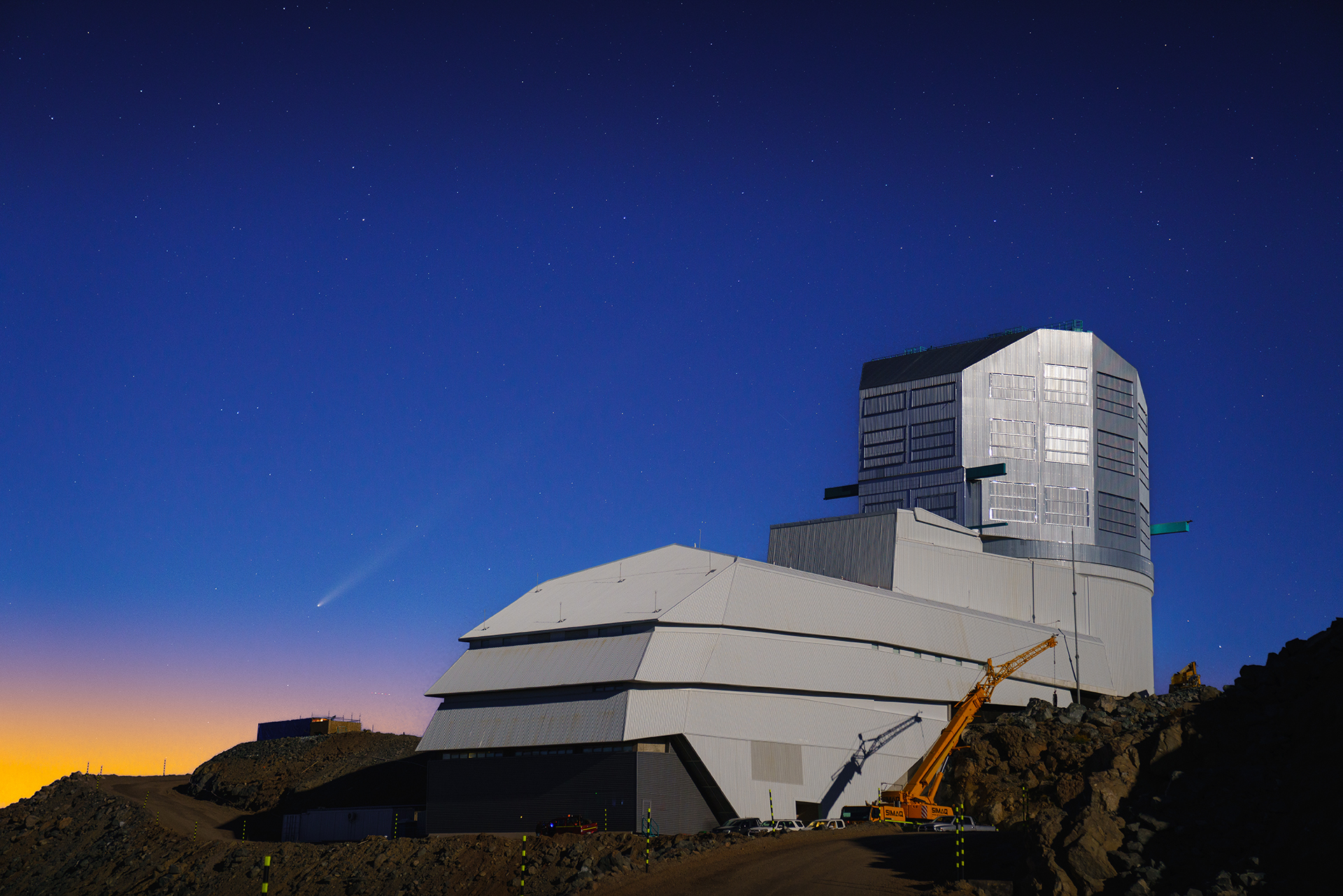
The NSF-DOE Vera C. Rubin Observatory’s Legacy Survey of Space and Time (LSST) will dramatically increase the inventory of known solar system small bodies (asteroids, comets, Kuiper Belt objects, etc) over the next decade. The LSST is a wide-area survey conducted using the Rubin Observatory’s 8.4-meter Simonyi Survey Telescope located on Cerro Pachón in Chile. LSST will cover the entire southern sky as well as a low-latitude portion of the northern ecliptic plane, taking pairs of images every few nights in a wide range of filters. Over ten years of observations, LSST is expected to observe approximately 100,000 near earth asteroids, 5 million main belt asteroids, 100,000 Jupiter Trojan asteroids, and nearly 40,000 Kuiper Belt objects.
The orbital distributions and physical properties of all these small body populations can be used to test different models of the early history of the solar system’s major planets. This talk will review what we have already learned from small body observations (especially observations of outer solar system populations), highlight some early LSST small body science, and discuss what open questions the entire LSST dataset will help us answer.
Dr. Kathryn Volk is a Senior Scientist at the Planetary Science Institute, an independent nonprofit 501(c)(3) corporation dedicated to Solar System exploration. Her research focuses on icy small bodies in the solar system. She is currently funded through NASA grants to study transneptunian objects (also known as Kuiper Belt objects) in the outer solar system with the goal of understanding their distribution and orbital dynamics to better test models of early solar system history using observations from ongoing surveys such as LSST. She is an active member of the LSST Solar System Science Collaboration and is the collaboration’s liaison to the LSST Survey Cadence Optimization Committee.