

By Erich Karkoschka

There will be a TOTAL LUNAR ECLIPSE on the morning of March 3rd. Partial phase begins at 2:50 am (Tucson) and ends at 6:18 during dawn. Totality last for one hour starting at 4:04 am. The moon will be about 10 degrees to the upper left of Regulus and not much brighter than the star at mid totality. The next two Total Lunar Eclipses visible in Tucson — in 2029 will be only partially visible during twilight. The next good one will be in 2033.

Mercury and Venus are visible all month at dusk low in the west.
Mercury is easier to see than Venus until the 20th. At mid-month, one can find Venus 8 degrees below Mercury. Mercury moves further north while Venus moves faster eastward, so that by the 26th, Mercury is 5 degrees to the right of Venus but 5 magnitudes fainter than Venus. On the 19th, Mercury is 50% illuminated. Toward the end of the month, both planets are about the same size, but Mercury is a crescent while Venus is fully illuminated.
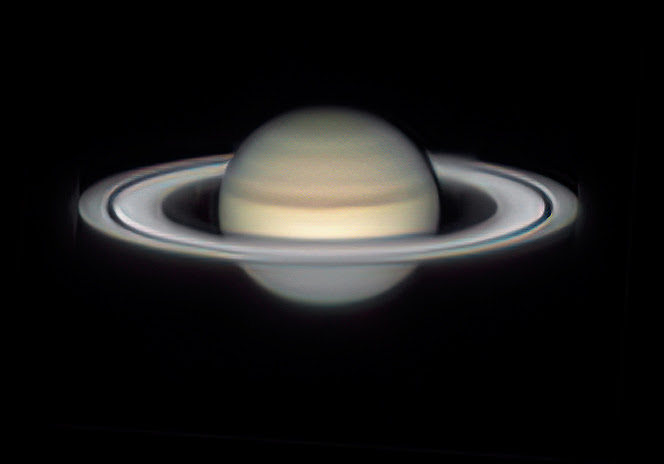
Saturn is higher than Venus, by the end of the month only 8 degrees higher. On March 8, it will be 1 degree to the left of Venus. This is the last time in the next 12 years that Saturn’s rings show as a thin line on both sides of Saturn’s sphere.
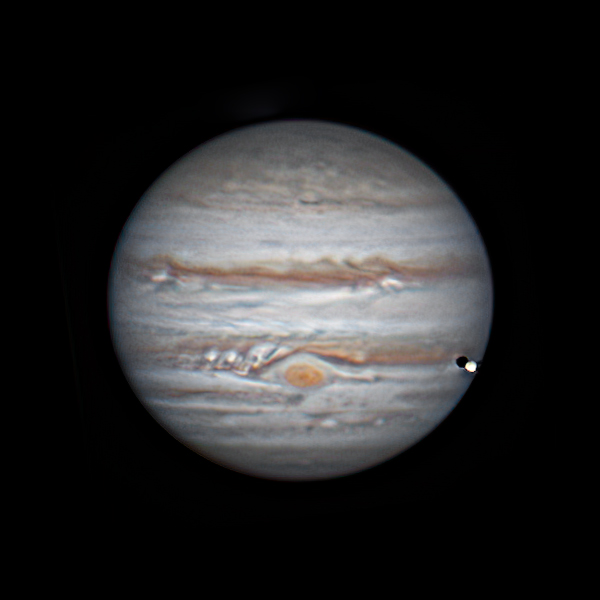
Jupiter transits 81 degrees high around 10 pm. On the 18th, Ganymede’s shadow moves across the disk until 10 pm.

Neptune is only .9 degrees north of Saturn around the 15th. This is the closest both planets have been during the last 35 years, and the same holds true until 2061.
Uranus is 70 degrees high at dusk. It can be easily located in binoculars 5 degrees south of the Pleiades.
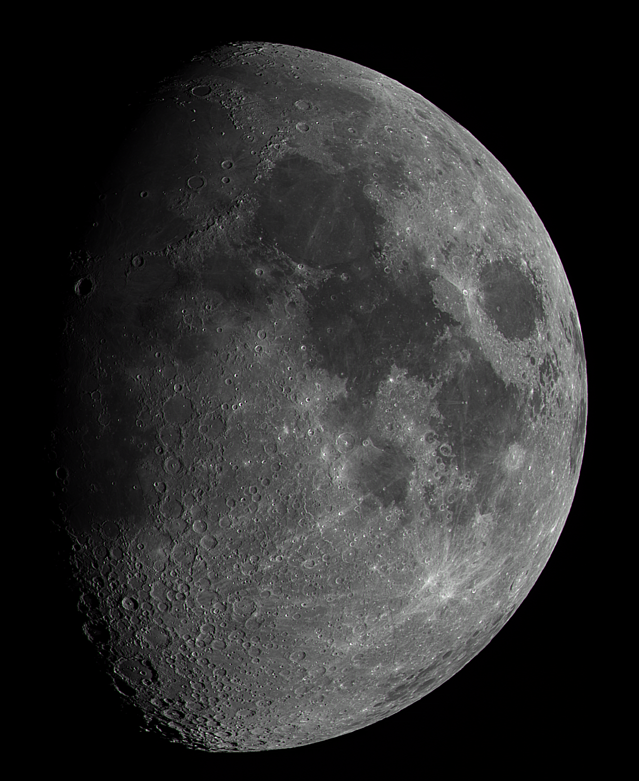
The moon is close to Mercury on the 18th and close to Saturn on the 19th. By the 26th it is close to bright Jupiter.