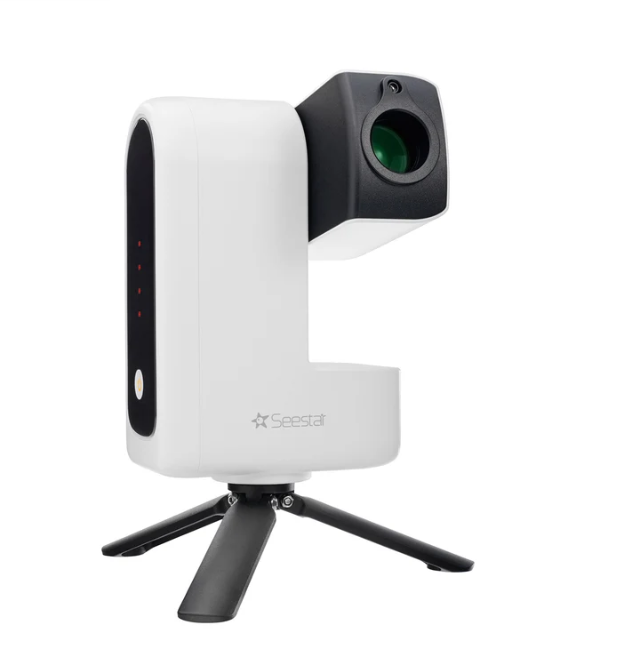
So, I Bought a SeeStar!: Basic Skills for the ZWO SeeStar S30 and S50
Open for Enrollment – Stephen Ferris, Instructor
Place: TIMPA Date: Thursday, May 7, 2026 Time: 7:00pm until completed.
Synopsis: ZWO SeeStars are a hot item for Amateur Astronomers both new and experienced. They combine good optics, a lot of automation and a user-friendly interface with entry level prices. This workshop will cover the basic use of both the SeeStar S50 and the SeeStar S30. It is open to both current SeeStar owners and those who are considering buying a SeeStar. If you have a SeeStar of either design, please bring it with you, fully charged. The instructor will walk you through basic procedures for using your equipment. Don’t forget to bring your phone or the tablet that you use to control it!
This training is ZWO SeeStar specific. If you are interested in a workshop for another kind of
SmartScope, please contact Stephen at the email address or number below.
If you are interested in joining us, please contact the instructor, Stephen Ferris: email, Text: 520
661-5355
SmartScopes and Snacks!
Pot Luck and Meet and Greet for All SmartScope Users at TIMPA!
Place: TIMPA Date: Saturday, May 9, 2026 Time: 7:00 PM until whenever
This TIMPA event is open to all SmartScope users of all levels of experience, plus anyone who
might be interested in getting a SmartScope. We’ll get started with a pot luck dinner social around
7:00 pm. (The sun sets late. Expect warm temperatures.) Bring some images and techniques to
share with the group! We would love to hear about any use of any SmartScopes that you might
have. Then, if weather permits, we’ll do some viewing after it gets dark until whenever.
I will provide water, sodas, basic paper plates and plastic utensils. You are not at all required to
bring food, but if you do, we expect about 10-12 people. I will notify everyone if we get more!
Please RSVP to Stephen Ferris, TIMPA Director, at email Text: 520-661-5355 by May 1.
If SmartScopes are at all of interest to you (or even if they are not), we would love to have you
come out and join us!