

By Erich Karkoschka

Mercury, Venus, and Mars are all behind the Sun. Mercury and Venus pass the Sun and thus will become evening planets in February. Mars lags behind, so that it will become a morning planet, but not until May.
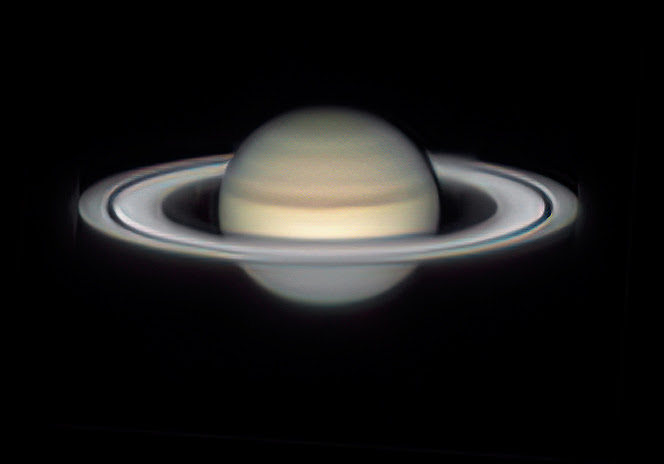
Saturn transits a little before sunset. Its rings open up fast, from .8 to 2.0 degrees, or from .5 to 1.3 arc-seconds width.

Neptune is approached by Saturn, from 3 to 1.7 degrees distance. Saturn will pass Neptune in February.

Uranus is transiting 77 degrees high around 8 pm. It is 4 degrees south of the Pleiades and just visible by naked eye at magnitude 5.6.
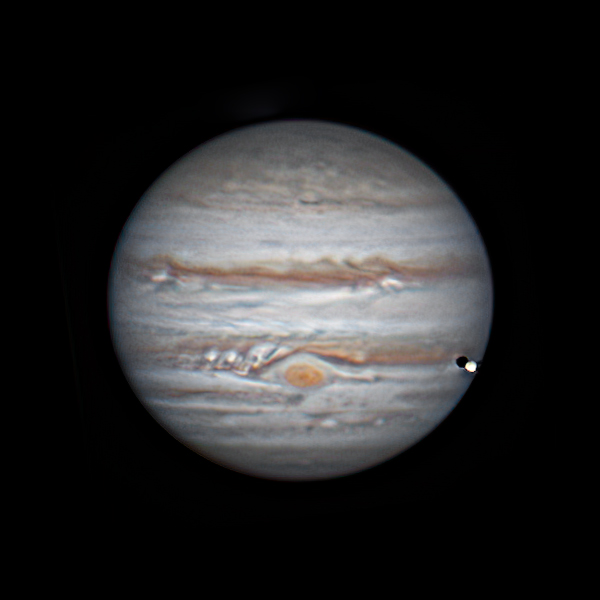
Jupiter comes in opposition on the 10th. It is still near Pollux. With a diameter of 46 arc-seconds, it is a perfect object in telescopes. At magnitude -2.7, it casts shadows at very dark sites. On the 6th, Ganymede’s shadow starts crossing Jupiter’s disk, followed by the moon itself 20 minutes later. Ganymede shows up as a small dark disk on Jupiter in telescopes, but not as dark as its black shadow.
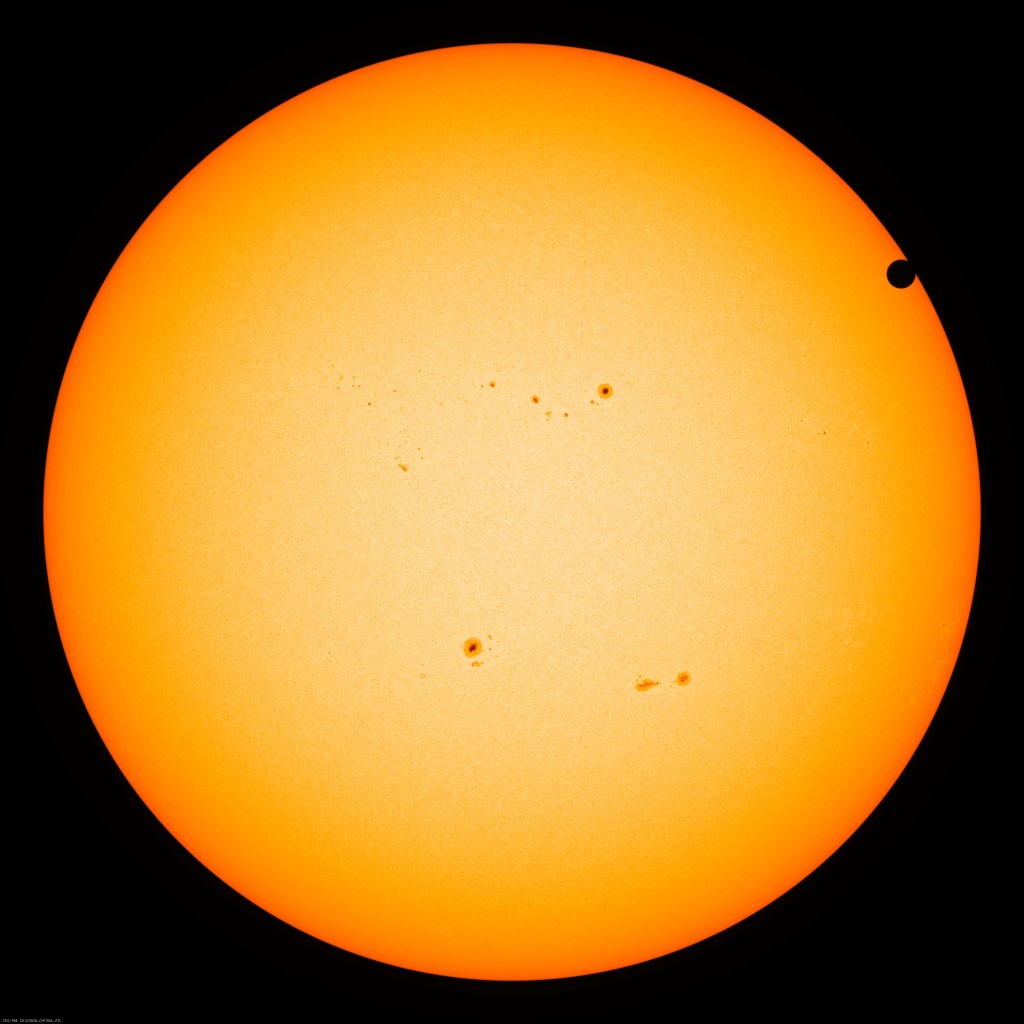
January is the month when the sunset gets delayed by 28 minutes, more than every other month.